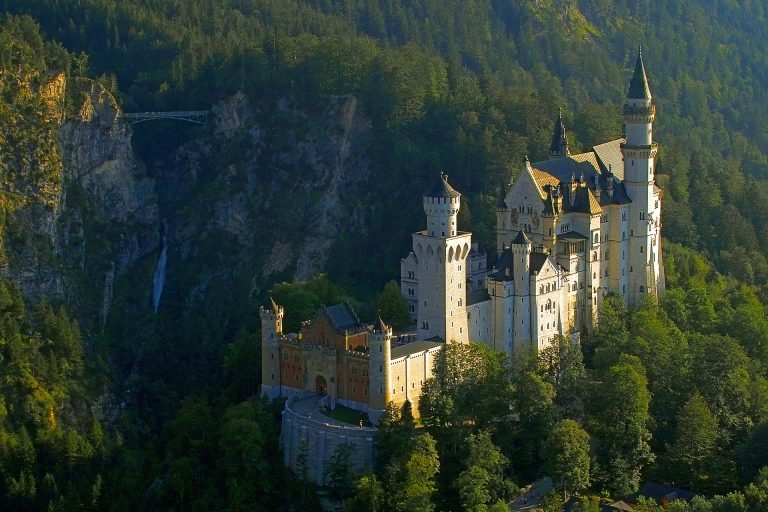
Anyone who loves to travel knows this all too well: it’s getting harder and harder to find truly interesting articles about Europe’s most famous places. Everywhere you look, you read the same phrases and the same recycled trivia. Yet certain places deserve much more than a superficial description. The Neuschwanstein Castlein Bavaria, for example, hides dark stories behind its fairytale facade. This article was written precisely for this reason: to offer you not only a guide to Neuschwanstein Castle, but also the most fascinating and legendary side of one of Europe’s most visited castles.
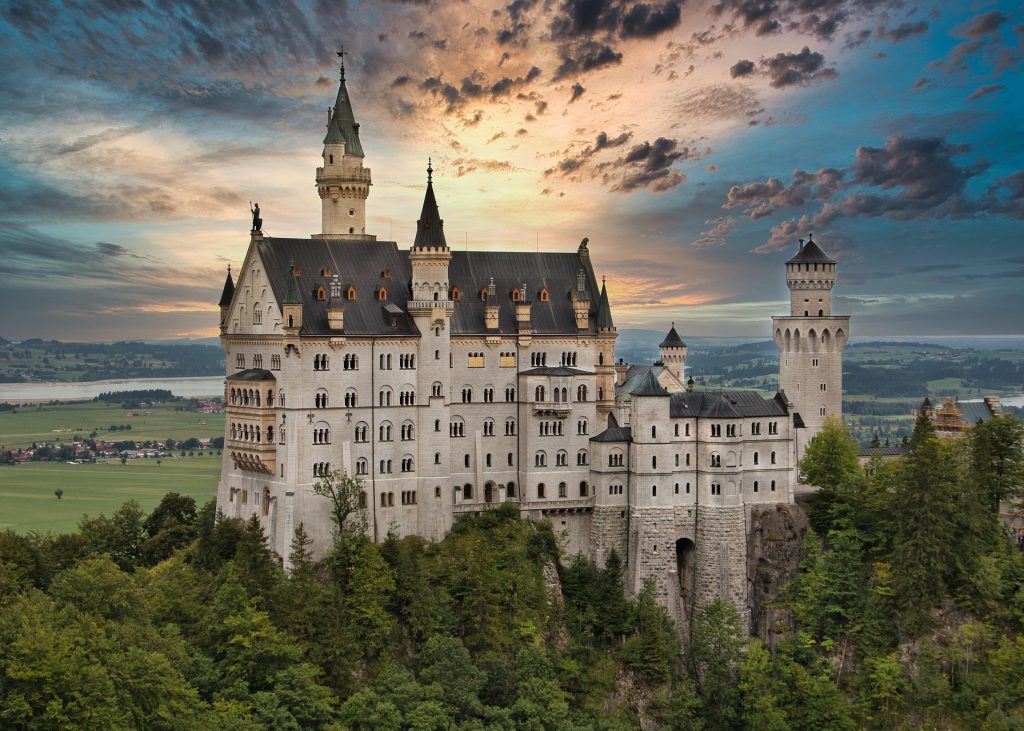
A Disney-style castle
Appearances can be deceiving
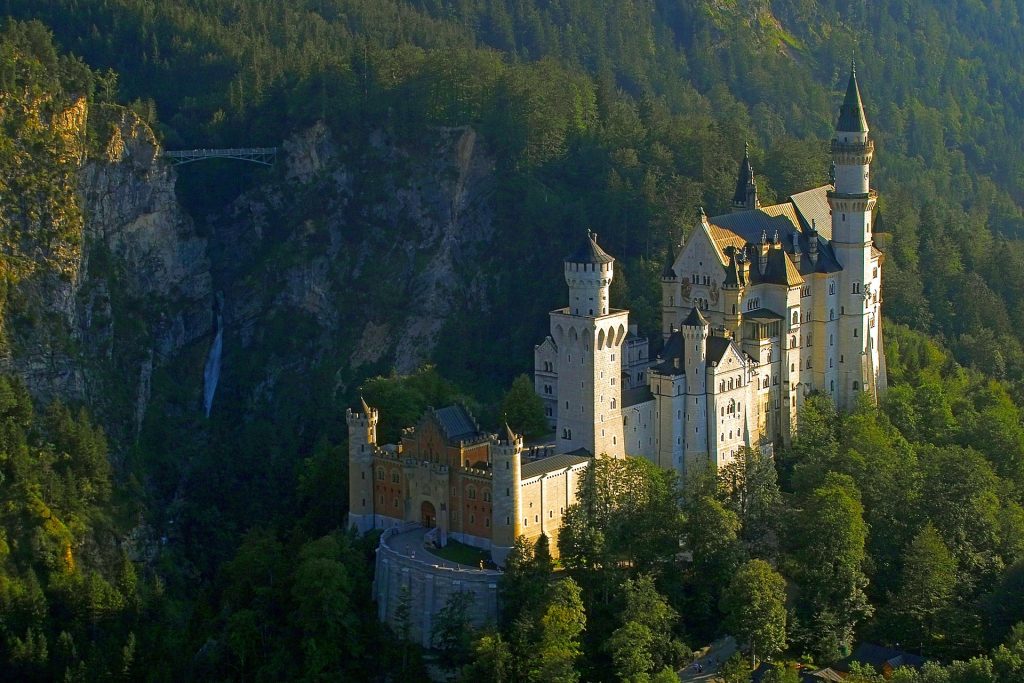
Perched high in the Bavarian Alps, Neuschwanstein suddenly appears like an unreal vision. White towers against a backdrop of mountains: this place inspired the famous Disney castle, but its true story is far more haunting and romantic than any fairy tale.
The castle was built by King Ludwig II of Bavaria, nicknamed “the Fairy-Tale King.” He, however, was not a ruler like any other. A loner and an introvert, Ludwig did not want to build a military fortress or a political palace. He wanted to build a timeless refuge, a place where he could live immersed in Germanic myths, the Knights of the Grail, and the works of Richard Wagner.
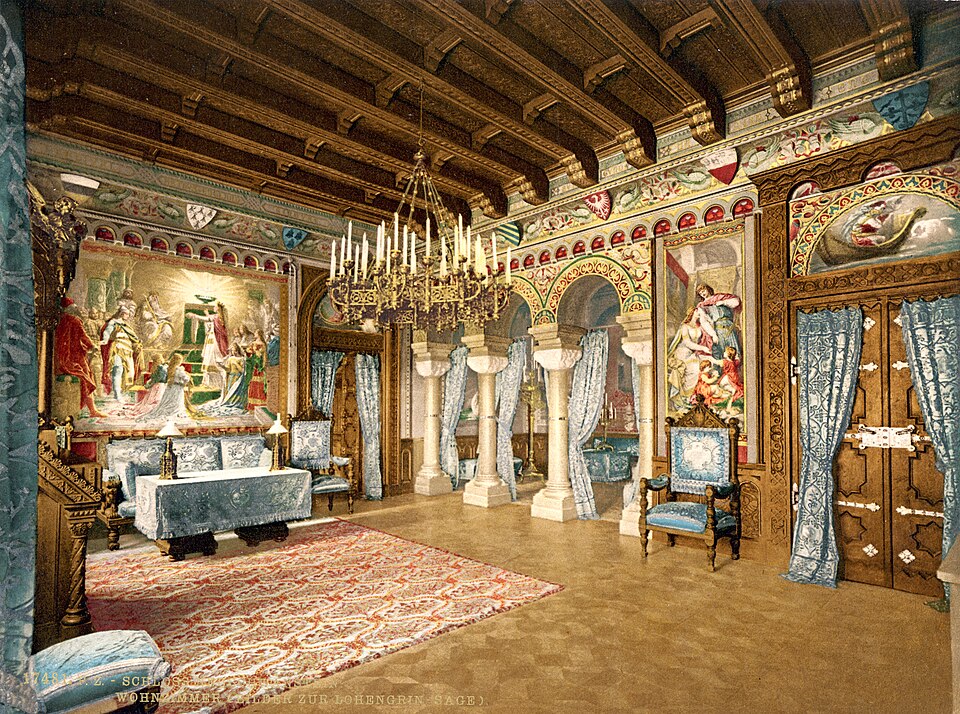
As you enter the castle’s halls, you immediately sense this obsession. The walls tell stories of medieval heroes, magical swans, tragic loves, and holy knights. Each room seems designed more to fuel a dream than to house a royal court. And to think that, despite its medieval appearance, Neuschwanstein was incredibly modern for its time: it had running water, heating systems, electric doorbells, and even a rudimentary form of a telephone.
The Real Mystery
The Death of Ludwig II of Bavaria
The most mysterious aspect of this place is undoubtedly the death of its creator. In 1886, Ludwig II was declared mentally unstable and deposed from the throne. A few days later, he was found dead in Lake Starnberg along with his personal physician. The official account cited suicide, but to this day the incident remains shrouded in mystery. Some claim he was assassinated for political reasons, while others believe he was attempting to escape. There are no definitive answers, and it is precisely this enigma that has transformed Neuschwanstein into an extremely mysterious place.
Recommended Tour of Neuschwanstein Castle
Helpful Tips
To visit the castle properly, you need to plan ahead, especially since it’s one of the most popular tourist destinations in Europe. Here’s an itinerary for Neuschwanstein Castle.
The ideal starting point is Munich. From there, you can easily reach the small village of Hohenschwangau: the best advice we can give you is to arrive very early in the morning, because the crowds grow quickly. Here you can also visit the king’s residence for €26. Before heading up to the castle, however, it’s worth stopping at Lake Alpsee. The view of the mountains reflected in the water is spectacular.
The climb to Neuschwanstein can be done on foot, by shuttle, or in traditional horse-drawn carriages. The walking route is the most picturesque. A must-see is the Marienbrücke, the famous suspension bridge from which the castle’s most iconic photo is taken: a small, personal souvenir. After the tour inside the castle, which costs about €25 (the price goes up by a few euros if you also want to visit the museum), many tourists leave right away. And that’s a mistake. Staying until late afternoon lets you see the castle with fewer people and in incredible light, especially in the fall and winter.
Fun Facts
Where exactly is Neuschwanstein Castle located?
It is located in southern Bavaria, near the village of Schwangau, not far from the Austrian border. The nearest and best-known town is Füssen, about 5 km away. It is about 120 km southwest of Munich.
Want to learn more interesting facts about the places you visit? Download Tourial!
How long does the castle tour last?
The guided tour lasts about 30–35 minutes. A guided tour is required, and admission is only permitted at the time indicated on the ticket.
What is the interior of the castle like?
The castle’s most famous rooms are: the Throne Room, inspired by Byzantine churches; the Singers’ Hall, a very long ceremonial hall decorated with scenes from Wagnerian operas such as *Lohengrin* and *Parsifal*; and the king’s bedroom, in the Neo-Gothic style.